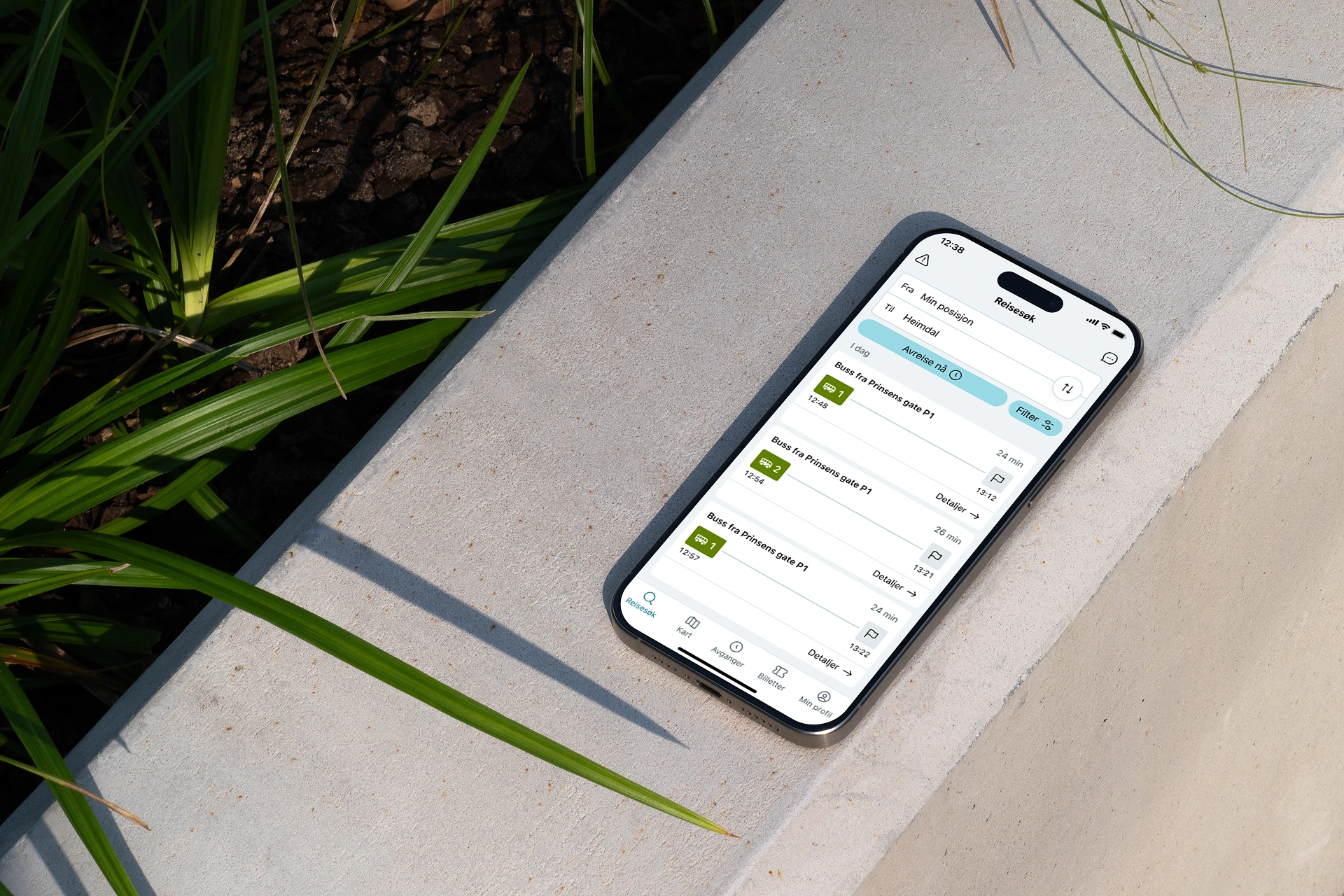
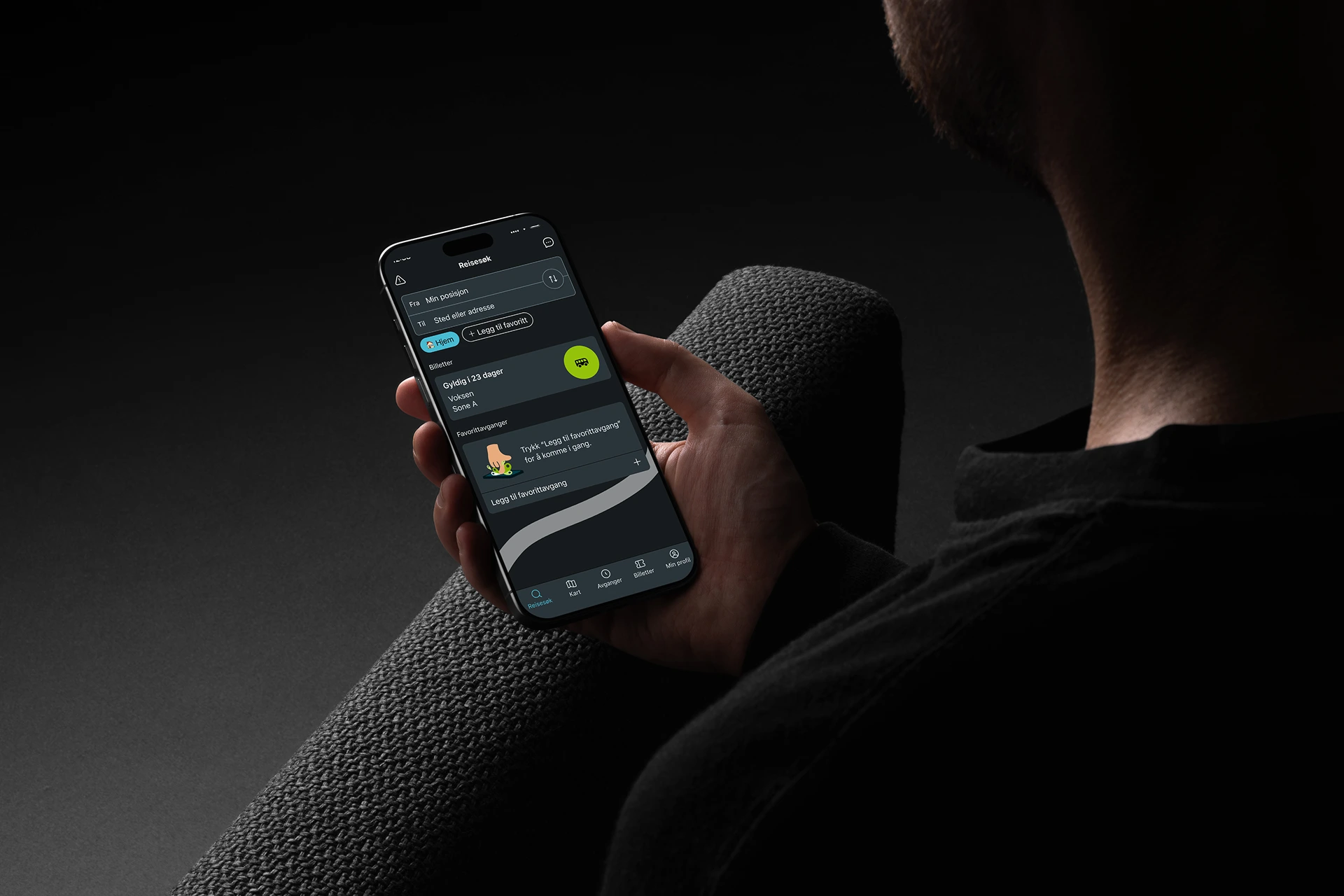
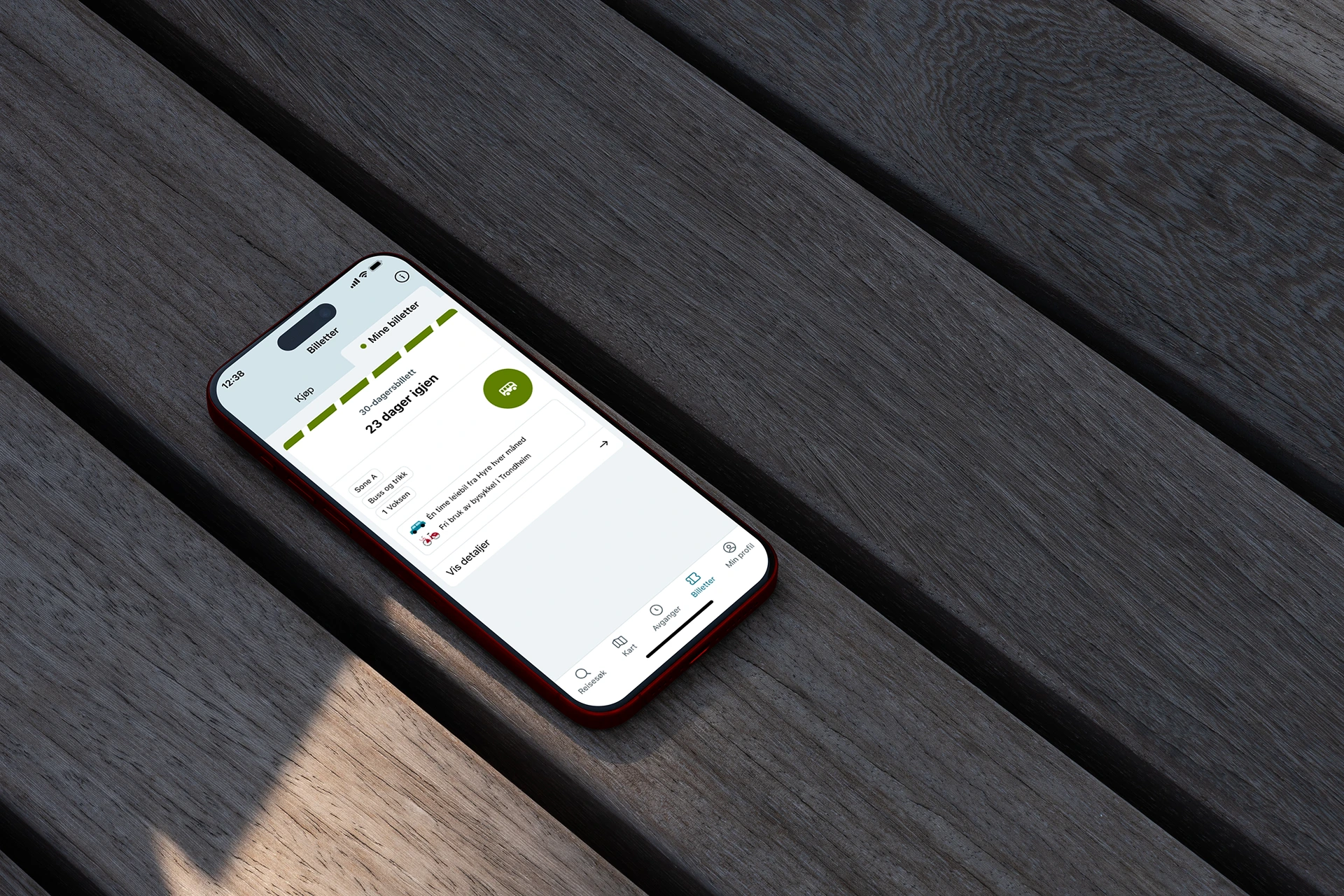
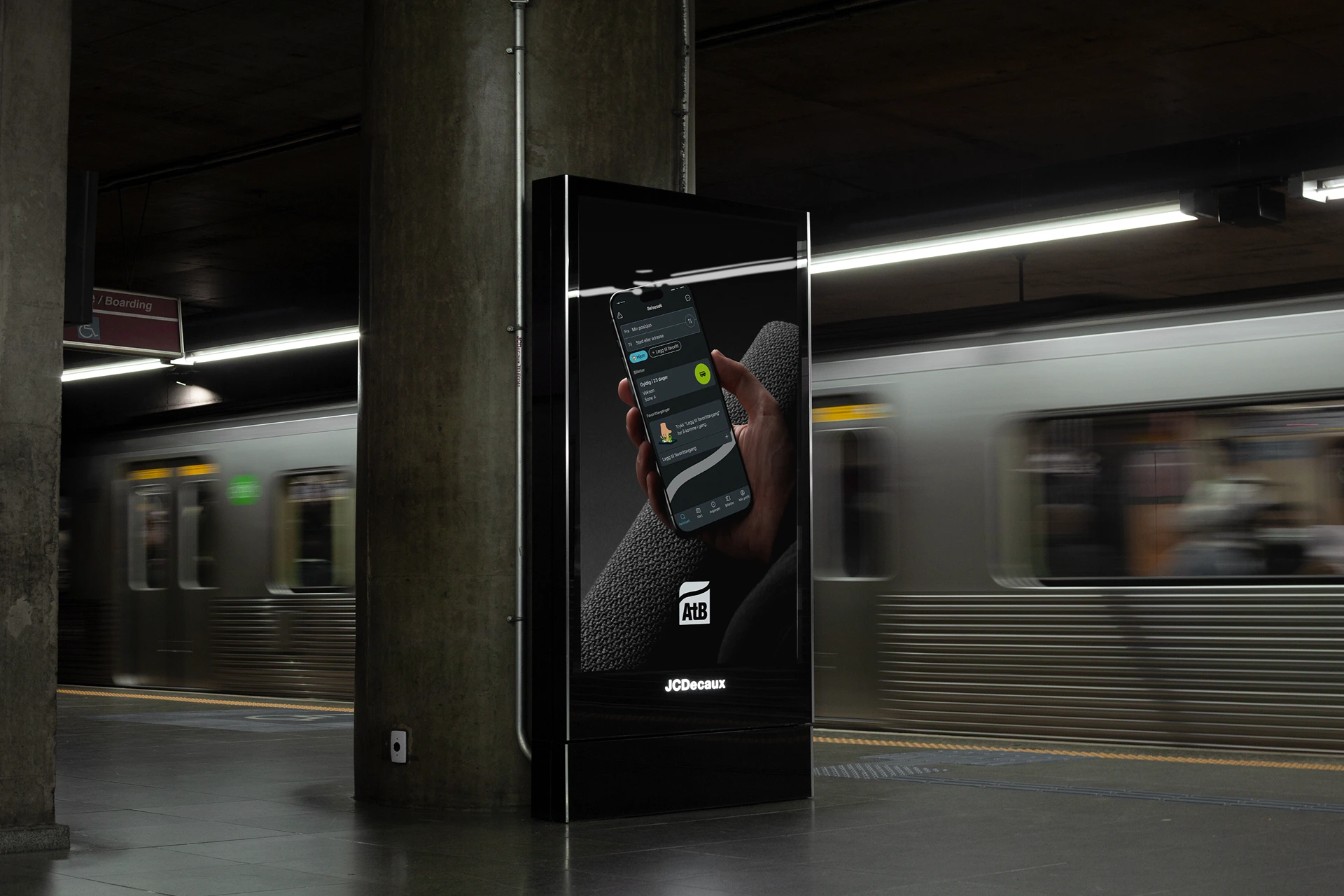
AtB is building the Mobility Platform — a scalable ecosystem of digital products designed to make sustainable travel easier and more accessible for everyone. Serving more than 500,000 people across multiple counties, the platform aims to deliver a seamless, intuitive travel experience while giving operators full ownership of their data and a stronger foundation for innovation. I have been part of this journey for nearly three years, working alongside a cross-disciplinary team of around 20 people.
In 2019, AtB took a significant step toward more flexible and future-oriented mobility services by establishing an internal development department. Their ambition was to create a unified travel experience across counties, reduce dependency on external vendors, and build long-term technological capability. This initiative led to the Mobility Platform — a suite of interconnected products designed to support travelers throughout their journey while enabling public actors to drive innovation on their own terms.
As a member of the design team, my role was to translate complex mobility challenges into clear, user-friendly solutions. We followed a structured, user-centered process grounded in continuous insight, data, and iterative refinement. Our user testing involved a wide range of people — from seniors to blind users — ensuring that accessibility and inclusivity were embedded throughout the platform. Working closely in an agile SCRUM setup, the team collaborated across disciplines, with regular design reviews, co-design sessions, and workshops to maintain quality and alignment.
A key part of the work involved establishing a robust Figma-based design system with scalable components, design tokens, and guidelines that ensured consistency across all products. At the same time, we contributed to building AtB’s internal design discipline, supporting recruitment and establishing strong design practices that will serve the organization long-term.
I worked full-time as a consultant on this mission from June 2022 to April 2025, nearly three years of meaningful, complex, and highly collaborative work. The result is a flexible and inclusive mobility ecosystem that supports more than half a million users, scales across multiple regions, improves accessibility for diverse groups, and provides a foundation for continuous innovation within public mobility services.